

Listed Building Surveys and Pre-Purchase Heritage Advice
Providing the knowledge, peace of mind and confidence to make an informed decision when purchasing a listed or historic building.
The idea of purchasing a listed building as a home, retail, office or leisure space can be both exciting and daunting. The first and most important question to ask is: can this building be what I want and need it to be?
A Listed Building Survey, also known as a Pre-Purchase Heritage Survey, assesses the building on an individual basis. It identifies heritage constraints, opportunities and potential obstacles that may arise, giving you informed advice before you commit to the purchase.
The purpose of the survey is to help you understand whether the building can meet your needs, what changes may be possible, and how your goals can be achieved while respecting the building’s historic and architectural significance.
A Pre-Purchase Heritage Survey comprises two parts: a site visit with the client and a written Historic Building Pre-Purchase Survey Report.
Ensuring prospective owners have a thorough understanding of the property they wish to acquire.
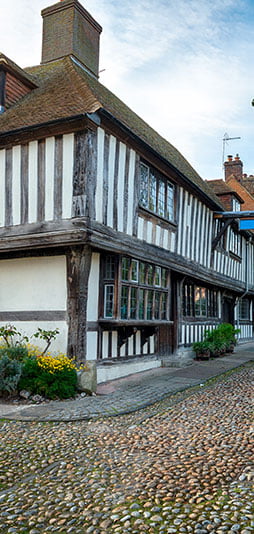
The written Historic Building Pre-Purchase Survey Report can assess and provide information on the following:
Historic Building Pre-Purchase Survey Report
- Unauthorised works - Prior to the visit I will research all relevant planning history, and will then identify any development that has not been granted permission. As the incoming owner, you inherit any legal responsibility for such works; the consequences of which are best avoided from the outset.
- Brief description of significance and what development would be acceptable and achievable.
- General historic building survey, which will identify any issues, or clues that potentially indicate yet to be identified problems, such as damp patches, cracks in ceilings, plaster or mortar joints, uneven or ‘bouncy’ floor boards, a dipped roof or bowing walls. I will also access the attic space to inspect the truss. Roof timbers can give a good indicator of the building’s true age and evolution.
- A physical and visual assessment of the outside or surrounding space and any potential risks such as vegetation, rainwater goods or neighbouring buildings.
- A brief report on planned development within the neighbouring area which may impact upon the building’s significance.
Why Commission a Listed Building Survey?
Buying a listed building carries responsibilities that are different from buying a modern property. Alterations, repairs and previous works may require careful consideration, and in some cases Listed Building Consent may be needed before changes can be made.
A Listed Building Survey helps prospective owners understand these responsibilities before purchase. It can also help identify opportunities, risks and likely planning considerations, providing the confidence needed to proceed, renegotiate or reconsider.
Related Heritage Services
If you are already planning alterations, you may also need heritage planning advice or a heritage assessment and statement to support a planning application or Listed Building Consent application.
For an informal, no-obligation conversation about a listed building or historic property, please get in touch.